
No Mortar, No Adhesives, Just Stone
What happens when you give a group of architecture students a pile of stone blocks and challenge them to build a bridge? No mortar, no adhesives, no shortcuts. Just gravity, balance, geometry and a good understanding of how stone works.
This was the starting point for a hands-on workshop I had the pleasure of leading at the Carrières du Hainaut, the renowned Belgian quarry where the famous Fossil Blue Stone is extracted.
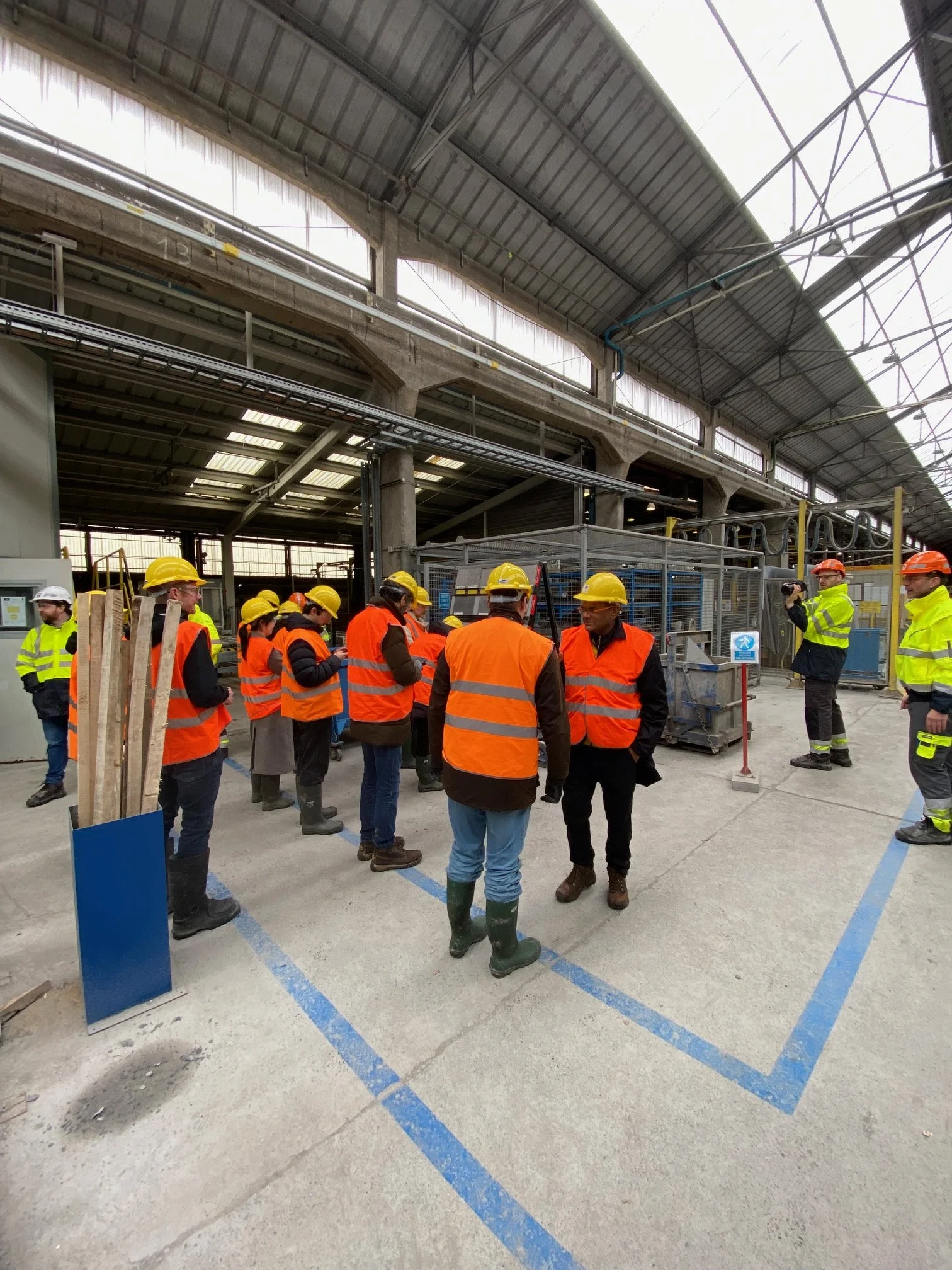
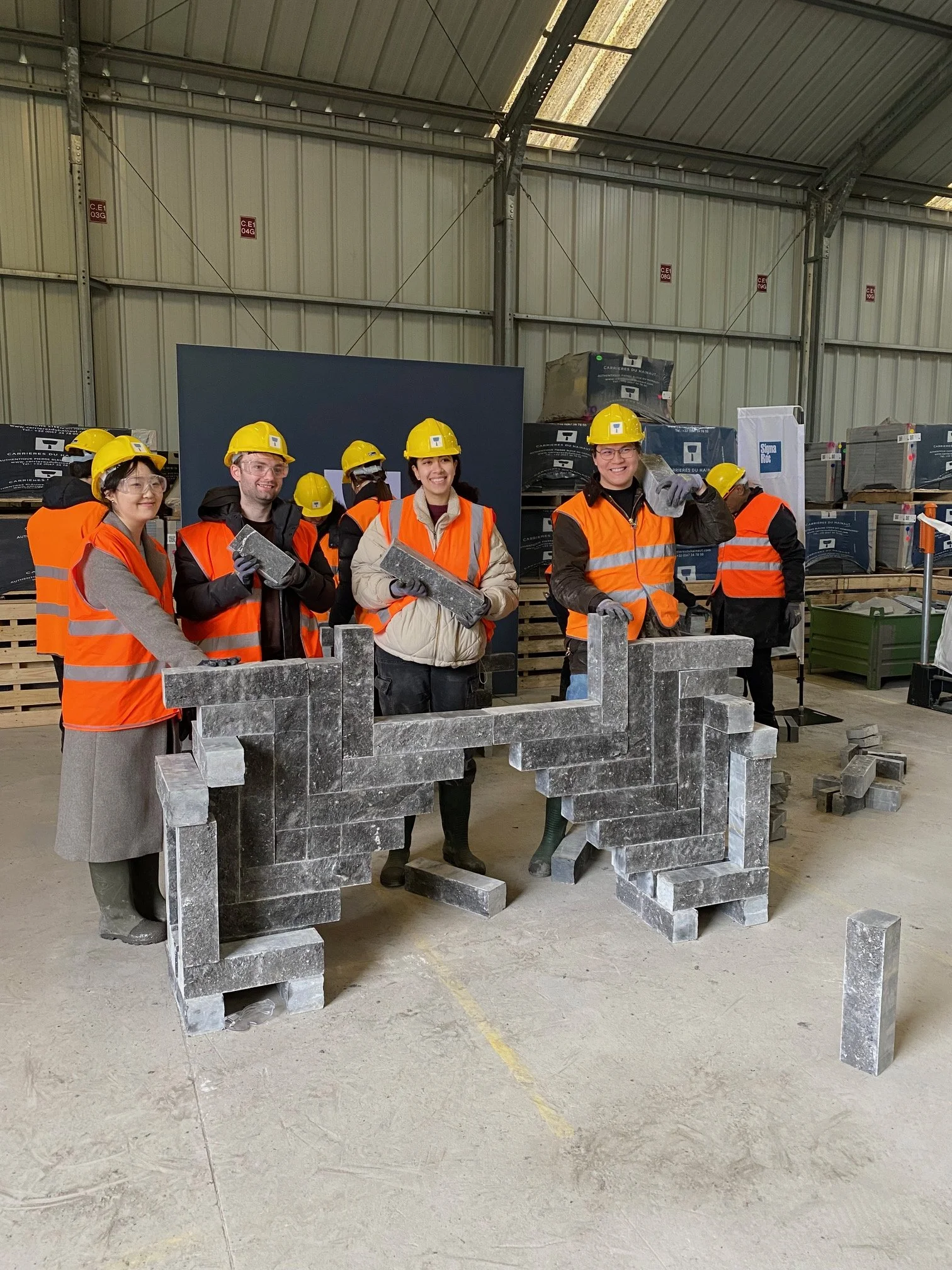
The workshop brought together twelve postgraduate students and three tutors from Harvard's Graduate School of Design, alongside leading figures from the architectural and engineering worlds, including architects Amin Taha and Hanif Kara, and David Watson, Technical director at Hanif Kara's engineering practice and also co-educator at Harvard.
Learning through making.
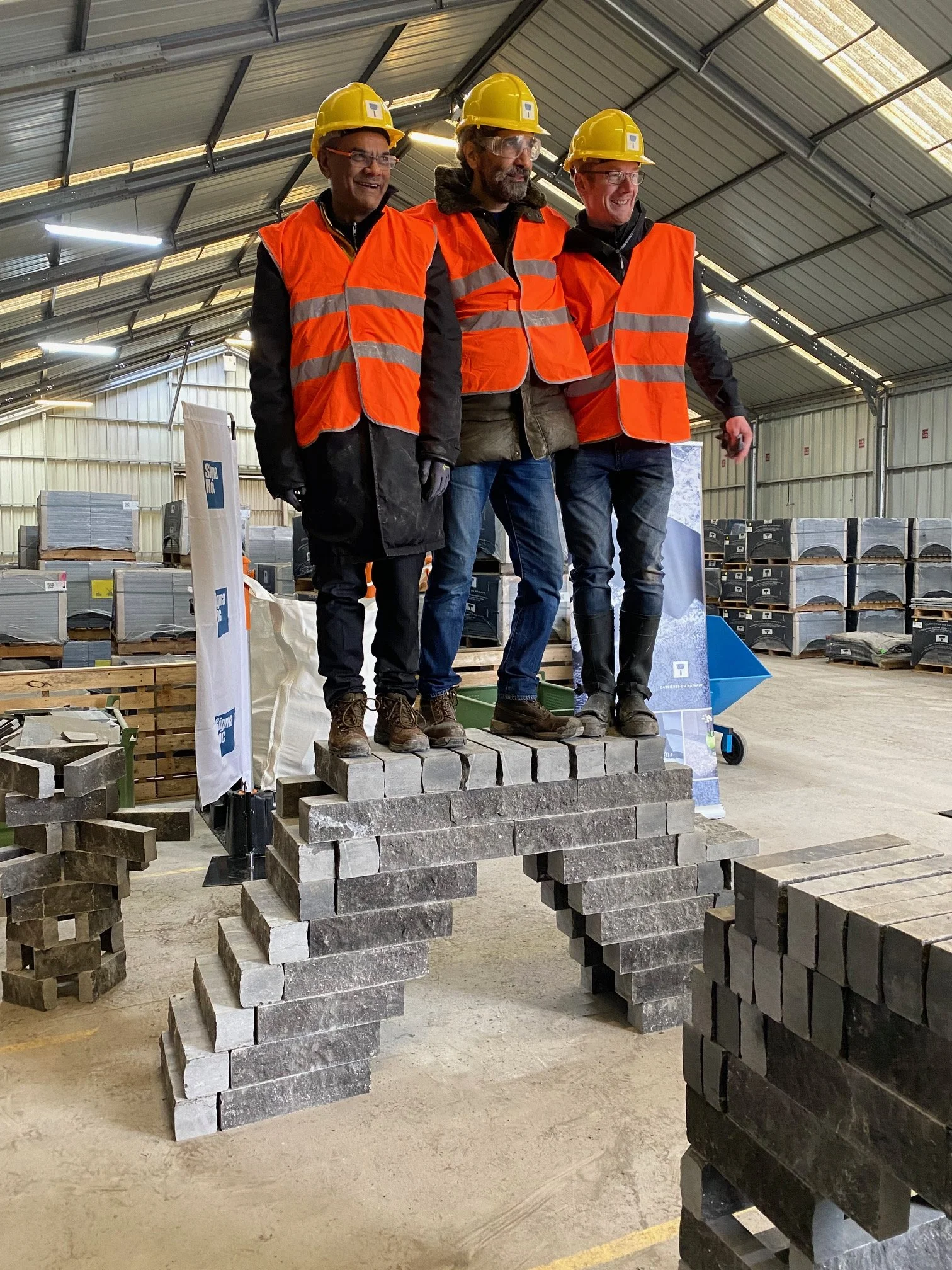
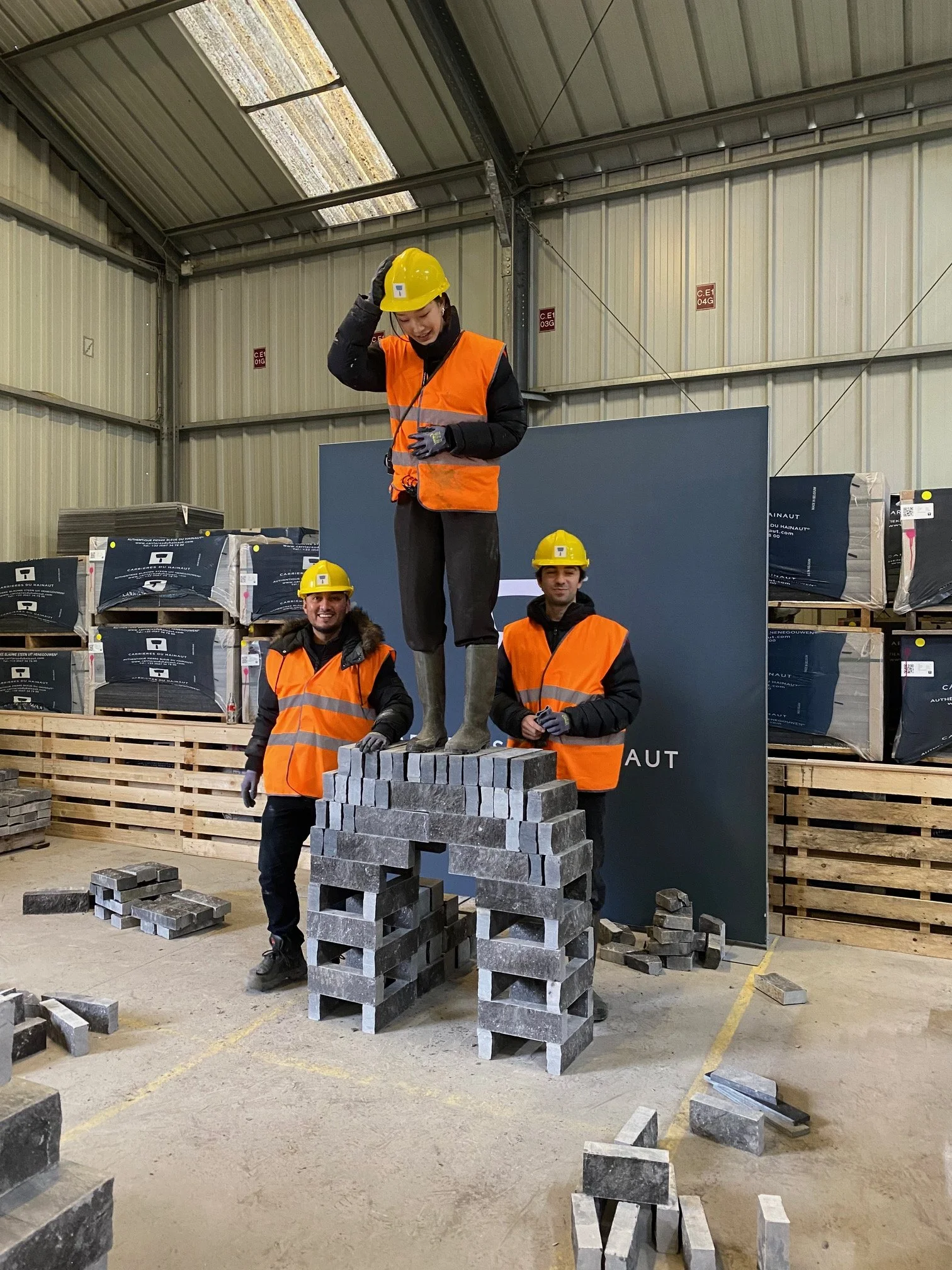
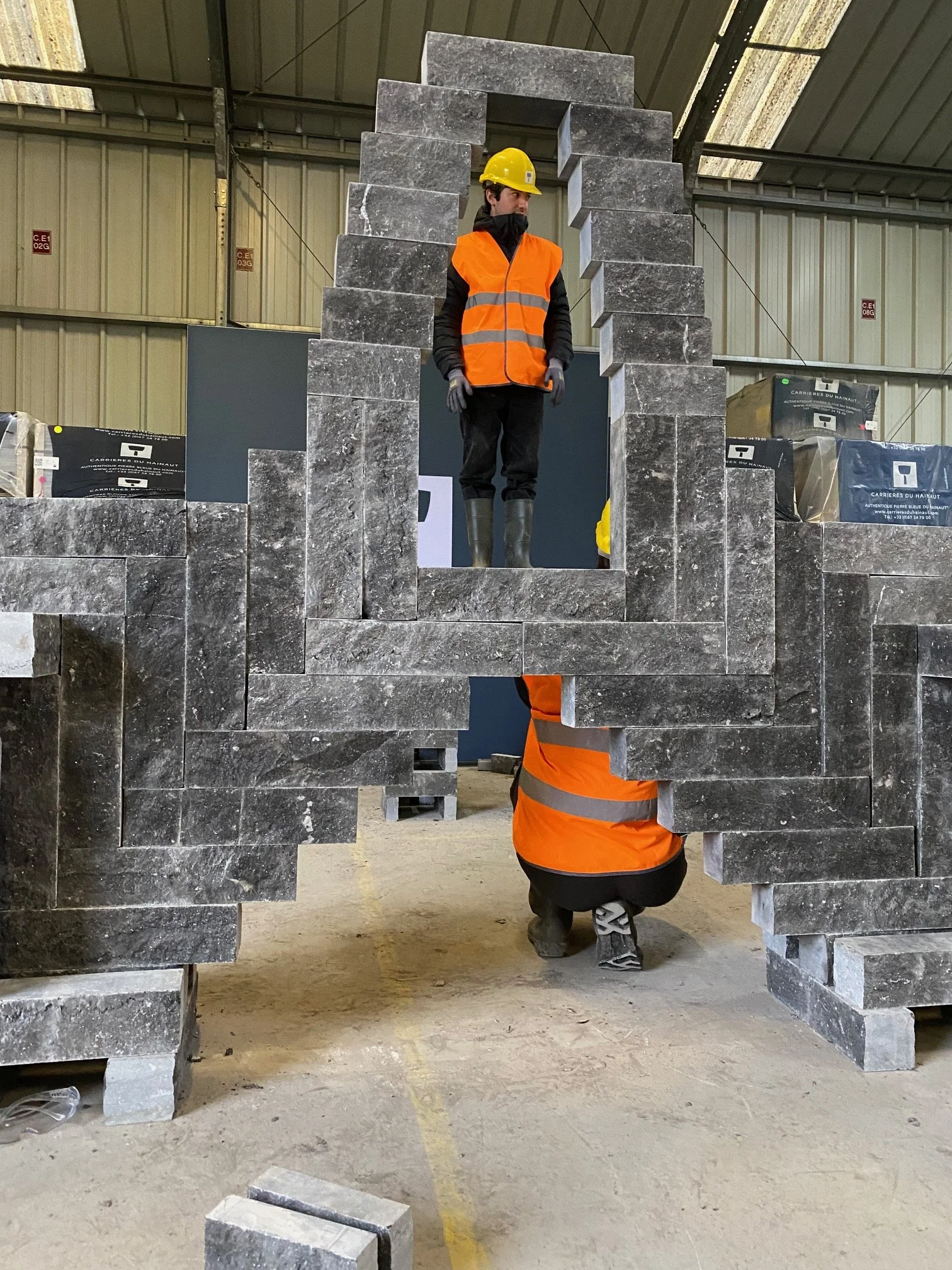
Using different stone elements normally destined for paving and street construction, the students were divided into small groups and given a simple assignment. Each team had to construct a self-supporting arch with a clear span of one metre, without using any adhesives or bonding materials. The final structure had to be strong enough to support at least one person.
It sounds straightforward, but working with stone in compression requires a very different way of thinking. Every element has to find its place, every contact point matters, and the geometry of the construction determines whether the structure will stand or collapse.
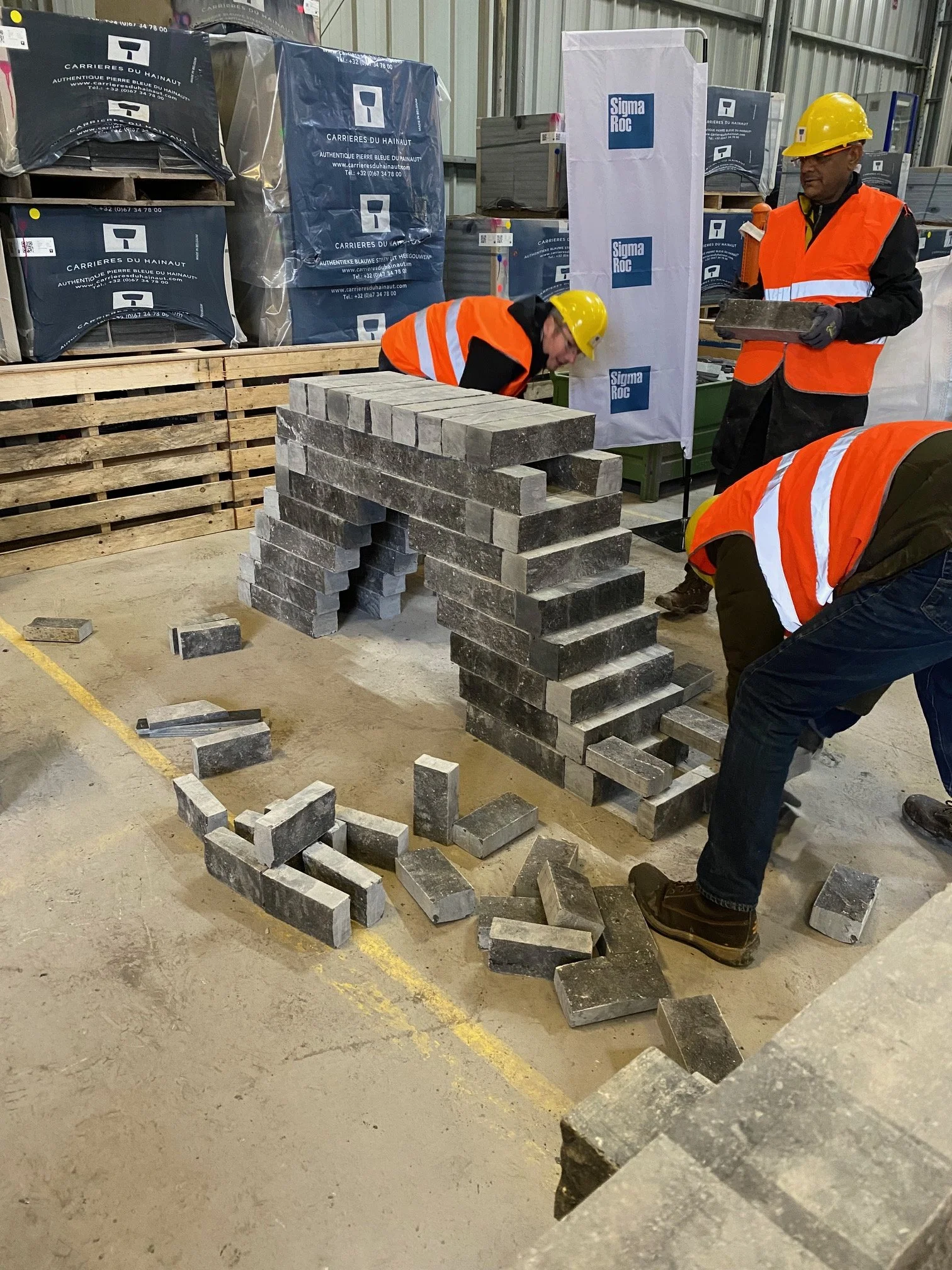
Through trial and error, discussion and plenty of hands-on experimentation, the students and professors explored how individual pieces could work together to create a stable structure. Ideas were tested, adjusted and sometimes spectacularly challenged by gravity.
A conversation between architecture, engineering and craftsmanship
What made the workshop particularly interesting was the mix of backgrounds and expertise in the group. Architects, engineers, tutors and students approached the material from different perspectives.
Amin Taha, who initiated the visit, had a particular interest in the practical knowledge surrounding natural stone: its cutting, pricing and potential application in structural construction. These considerations are increasingly relevant when exploring ways to reduce the carbon footprint of buildings and rethink the materials used in their construction.
One of his favourite moments was watching me explain to David Watson why a particular tower construction was heading towards catastrophic failure. A reminder that we do not always need computer modeling to feel where structures are inherently unstable.
Rediscovering the potential of stone
Working at the Carrières du Hainaut made the experience meaningful. Surrounded by the very material we were experimenting with, the students could discover Belgian Fossil Blue Stone not just as a finishing material, but as a material with a much wider structural and architectural potential.
The workshop was an opportunity to reconnect with the fundamental principles of building: understanding a material, exploring its limitations and discovering what it can do when used intelligently.
For me, the most rewarding part was seeing how quickly the groups engaged with the challenge. By working directly with the stone, they could experience things that are difficult to communicate through drawings, models or lectures alone.
Sometimes, the best way to understand construction and architecture is simply to start building.